













For decades, dental anxiety has centered around needles, drills, pressure, vibration, and the fear of pain. But modern dentistry is changing rapidly—largely thanks to the rise of laser technology. Laser dentistry has transformed how dentists treat cavities, gum disease, infections, sensitivity, and even perform cosmetic procedures. These advanced tools reduce discomfort, shorten healing time, and often eliminate the need for anesthesia altogether.
But how do lasers actually make dental care gentler? And are they right for every patient? Let’s explore the technology, the benefits, and the limits of this growing dental innovation.
1. What Types of Dental Lasers Are Used Today?
Not all lasers are the same. Different wavelengths interact with different tissues, giving dentists flexibility depending on the situation.
Soft-Tissue Lasers
These lasers are absorbed by water and hemoglobin, making them ideal for working on:
- Gums
- Oral mucosa
- Frenectomies
- Cold sores
- Periodontal pockets
They cauterize as they cut, resulting in minimal bleeding and less postoperative irritation.
Common types:
- Diode lasers
- Nd:YAG lasers
Hard-Tissue Lasers
These lasers target water molecules in enamel and dentin, making them suitable for:
- Removing decay
- Preparing cavities
- Etching teeth
- Treating enamel lesions
Hard-tissue lasers replace many functions of the dental drill—without the vibration or pressure.
Common types:
- Er:YAG lasers
- Er,Cr:YSGG lasers
Specialized Lasers for Whitening
Certain high-intensity lasers accelerate the whitening process by activating bleaching gels more efficiently.
Common lasers:
- Argon lasers
- Diode lasers for activation
Surgical and Diagnostic Lasers
Some lasers are used for:
- Biopsies
- Tissue sculpting
- Detection of early cavities (without X-rays)
These diagnostic lasers use fluorescence to identify decay before it becomes visible on radiographs.
2. How Are Lasers Used for Gum Disease, Whitening, and Fillings?
Laser dentistry is versatile, offering solutions across multiple specialties of dental care.
Gum Disease Treatment
Lasers can:
- Remove infected tissue
- Sterilize periodontal pockets
- Reduce bacterial load
- Promote tissue regeneration
- Minimize bleeding
Laser gum therapy (LANAP, for example) is significantly less invasive than traditional scaling and surgical gum therapy.
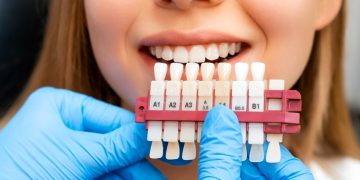
Teeth Whitening
Lasers speed up whitening by:
- Heating and activating whitening gels
- Allowing deeper penetration
- Reducing treatment time
Many patients experience:
- Faster results
- Less sensitivity
- More uniform whitening
Cavity Treatment and Fillings
Hard-tissue lasers can:
- Remove decay precisely
- Prepare tooth structure
- Sterilize the area before filling
- Minimize the need for anesthesia
- Avoid vibration associated with drills
They also preserve more natural tooth because lasers remove decay selectively, without cutting into healthy enamel.
Additional Uses
Laser dentistry can also assist with:
- Treating sensitivity by sealing tubules
- Crown lengthening
- Removing excess gum tissue
- Tongue-tie release
- Treating ulcers or cold sores
- Disinfecting root canals
- Reshaping tissue for cosmetic balance
In many cases, laser treatment eliminates the need for sutures.
3. How Do Lasers Improve Comfort During Dental Procedures?
The biggest appeal of laser dentistry is comfort. Many patients who fear traditional tools find laser treatment far less intimidating.
No drilling noise or vibration
Drills create:
- Heat
- Pressure
- Vibrations
- Anxiety-inducing sounds
Lasers, by contrast, feel like a gentle tapping or warm sensation.
Less need for anesthesia
Lasers cause less pain because:
- They seal nerve endings
- They create minimal friction
- They target only the treatment area
- They reduce inflammatory response
Patients with needle phobia especially benefit.
Fewer postoperative symptoms
Lasers reduce:
- Bleeding
- Swelling
- Sensitivity
- Tissue trauma
Many treatments feel comfortable during and after the appointment.
Natural sterilization effect
Lasers kill bacteria instantly, reducing risk of:
- Infection
- Postoperative complications
- Pain from residual pathogens
Precision minimizes unnecessary tissue damage
The laser beam is extremely narrow compared with drill bits, allowing dentists to remove only affected material.
4. Why Is Healing Time Faster with Laser Dentistry?
Lasers help the body heal more efficiently by reducing trauma and stimulating biological regeneration.
Less tissue damage
Lasers:
- Cut cleanly
- Do not tear tissue
- Avoid mechanical scraping
This means wounds are smaller and heal faster.
Simultaneous sealing of blood vessels
Soft-tissue lasers cauterize tiny vessels instantly, creating:
- Minimal bleeding
- Lower chance of bruising
- Faster clotting
Reduced inflammation
Because the laser sterilizes as it works:
- Fewer inflammatory mediators are released
- Swelling and discomfort are limited
- Recovery time is shortened
Biostimulation benefits
Certain wavelengths promote:
- Collagen production
- Increased blood flow
- Faster cell regeneration
This natural healing enhancement is one reason laser gum therapy is so effective.
Lower risk of infection
Sterile operating conditions accelerate healing and reduce the likelihood of complications, especially for soft-tissue surgeries.
5. What Are the Limitations of Laser Dentistry?
Laser dentistry offers profound benefits, but it is not perfect for every procedure or every patient.
Limitations include:
1. Cannot remove large metal restorations
Lasers cannot cut through:
- Amalgam fillings
- Metal crowns
- Certain ceramics
Drills are still needed in those situations.
2. Not ideal for deep or bulky cavities
If decay is extensive, a laser may be less efficient than mechanical tools.
3. Equipment cost affects availability
Laser machines are expensive, meaning:
- Some dentists may not offer them
- Treatments may cost slightly more
4. Learning curve for practitioners
Lasers require advanced training to use safely and effectively.
5. Not suitable for all types of tissue
Each laser works best on certain materials. A single laser cannot perform all procedures, so dentists often need multiple types of machines.
6. Whitening may still cause sensitivity
Even though laser whitening is gentler, some patients may still experience temporary sensitivity.
Final Thoughts: Is Laser Dentistry the Future of Comfortable Dental Care?
Laser dentistry has become one of the most transformative technologies in modern oral care. It makes treatments:
- Gentler
- Faster
- More efficient
- More precise
- Less intimidating
From gum disease therapy to fillings to cosmetic procedures, lasers reduce pain and improve healing in ways traditional tools cannot match.
Although not perfect for every application, laser dentistry continues to evolve rapidly. With improvements in wavelength control, precision, and affordability, patients can expect an even more comfortable and advanced dental care experience in the future.








Discussion about this post